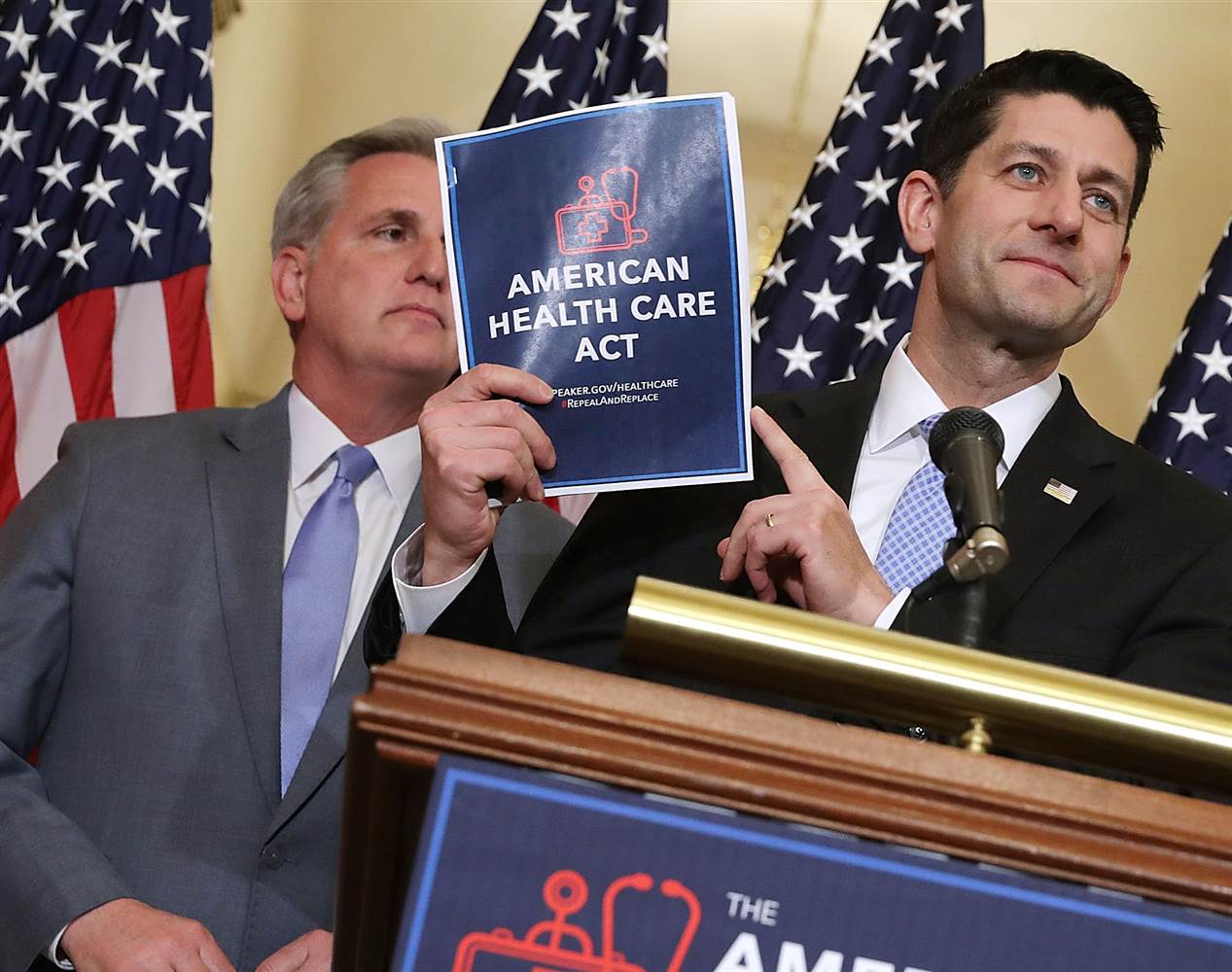
NAB Response to H.R. 1628—American Health Care Act of 2017

March 22, 2017
The Honorable Lamar Alexander, Chairman
Senate Health, Education, Labor Chairman
and Pensions Committee
428 Dirksen Senate Office Building
Washington, DC 20510
The Honorable Orrin Hatch
Chairman
Senate Finance Committee
219 Dirksen Senate Office Building
Washington, DC 20510
The Honorable Greg Walden
Chairman
House Energy and Commerce Committee
2125 Rayburn House Office Building
Washington, DC 20515
The Honorable Kevin Brady
Chairman
House Ways and Means Committee
1102 Longworth House Office Building
Washington, DC 20515
Dear Chairmen Alexander, Hatch, Walden and Brady:
The National Advisory Board (NAB) on Improving Health Care Services for Older Adults and People with Disabilities wishes to express our grave concern and opposition to the American Health Care Act (AHCA), the current healthcare reform legislation under consideration in Congress. For the past 10 years, our diverse group of nonpartisan healthcare professionals and consumer advocates who are experts on long-term services and supports has been studying the populations in need of these services and the infrastructure that has evolved to meet their needs in the community. While we are sponsored by Anthem, our group functions independently in multiple arenas: internally providing guidance and advice to Anthem and their affiliates and externally conducting inquiries and studies, providing public comments and sharing pertinent opinions and advice with other health insurers, trade associations and industry representatives.
We have produced numerous reports of our findings, including the often-cited Declaration for Independence. The latter seminal document includes six foundational principles on which we believe America’s long-term service and supports service system must be based:
1. Enhance self-care through improved coordination
2. Encourage community integration and involvement
3. Expand accessibility of services and supports
4. Uphold personal preference
5. Empower people to participate in the economic mainstream
6. Invest in improved technology
We believe it is fundamental for people who have functional impairments that limit their ability to independently carry out activities of daily living such as dressing and undressing, preparing meals and eating, bathing and doing personal hygiene, making thoughtful decisions, and managing personal schedules and finances, to have necessary support services that will enable them to function effectively in their homes and in the community. In most cases, the alternative to having these services available for those who need them is institutionalization, which is expensive, segregating and stifling.
We are most concerned about the impact of the AHCA on Medicaid. As proposed, this legislation will most certainly result in restricting access to needed home and community-based service (HCBS) programs, Community First Choice (CFC) programs, Money Follows the Person (MFP) programs, and other vital community service programs that now save money and foster independence. Coincidentally, the deep cuts proposed in the Bill will result in moving people who were already supported by these cost effective, participant-directed programs back into relatively high cost nursing homes and other facilities that restrict independence and community participation.
Our fear is that some aspects of the AHCA are based on phantom economic assumptions. In this case, the assumption is that by setting caps on Medicaid spending and by moving the onus of responsibility for these programs to individual states instead of sharing the responsibility as we are now, program administrators, community advocates and others will create efficiencies that will enable services for those most in need to be sustained. In our experience, this will absolutely not be the case. Rather, the effect will be that tens of thousands of people who are now living in the community, with assistance from Medicaid-funded home and community-based service programs, will be prematurely and unnecessarily referred by hospitals and doctors to nursing homes which are subsidized at far greater cost to the states than the cost of their current share of Medicaid support for these individuals. Many efficiencies in service provision and lowered cost of care, gained through state partnerships with managed care companies for Medicaid beneficiaries with significant disabilities, will be lost due to the AHCA cost shifting strategy. Considering all the dynamics involved, Medicaid restructuring based on deep cuts to the program in the context of health reform will not end well.
It is our wish that due consideration be given to the potential cataclysmic effects of the current proposal on people with disabilities and older adults who need long-term services and supports in order to be productive, contributing members of our communities. As currently constructed, the AHCA will have disastrous outcomes. We urge you to amend the Bill to ensure the Medicaid program remains comprehensive and adequately funded. We would be happy to provide additional information or answer any questions you may have.
Respectfully,
Lex Frieden, Convener
National Advisory Board on Improving Health Care Services for Older Adults and People with Disabilities
Lex Frieden, Convener | Kathy Brill, MEd | Charles Christiansen, EdD | Yanira Cruz, PhD
Matthew Davies | Berthy De La Rosa-Aponte | Sita Diehl | Edward H. J. Elms, MD
The Honorable Charles (Chuck) Graham | William H. Graves, EdD | Hunter Hurst
Mark Johnson | Leonard Kirschner, MD | Kevin J. Mahoney, PhD | Cynthia Overton, PhD
Michelle Putnam, PhD | Lee Schulz | The Honorable Jane Woods